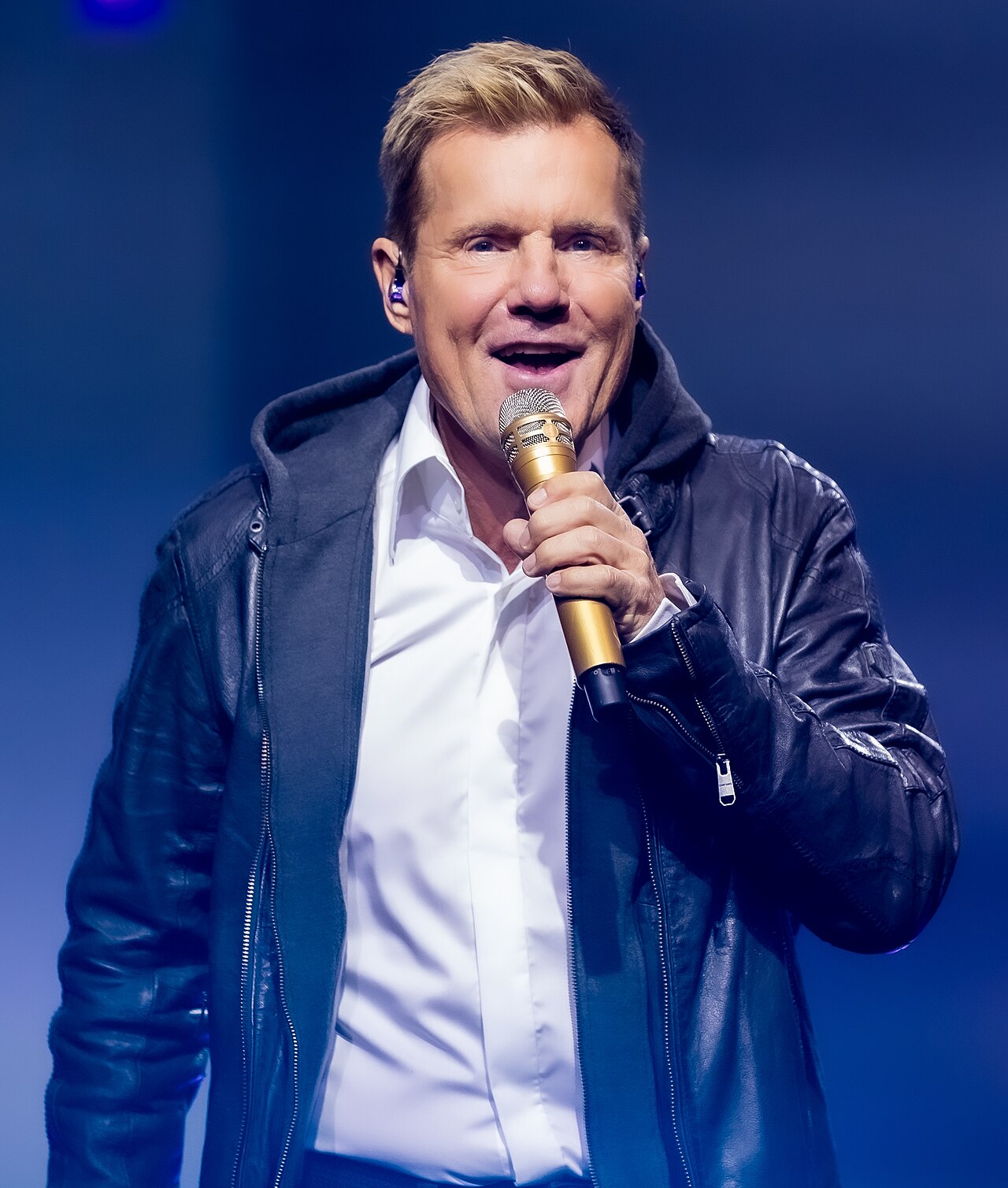
Dieter Bohlen: From Berne's Birthplace to Global Pop Success
The journey of a musical phenomenon often begins in unassuming circumstances, far from the flashing lights of global fame. For Dieter Bohlen, widely recognized as Germany's "Poptitan," this incredible saga commenced in a quiet corner of Niedersachsen. Unpacking the origins of this prolific music producer, songwriter, and television personality offers a fascinating glimpse into the foundations of his unparalleled career. To truly understand the architect behind Modern Talking and the straight-talking judge of DSDS, one must first explore where and when Dieter Bohlen was born, tracing his steps from a humble upbringing to international stardom.
The Humble Beginnings: Where Was Dieter Bohlen Born?
The precise details of an artist's birth often provide the first brushstrokes in the portrait of their life. For those seeking to know more about the foundational years of the German music icon, the answer to the pivotal question, "Wo ist Dieter Bohlen geboren?" or "Where was Dieter Bohlen born?" lies in northern Germany. Dieter Günter Bohlen was born on
February 7, 1954, in Berne, Niedersachsen, Germany. This date places him under the astrological sign of Aquarius, often associated with individuality, innovation, and a humanitarian spirit – traits that, in retrospect, seem to align surprisingly well with Bohlen's distinct path.
A Berne Boyhood and Family Roots
While Berne, a municipality nestled in the district of Wesermarsch, was his birthplace, Bohlen's early childhood unfolded amidst the pastoral landscapes of Ostfriesland. Here, he grew up on a farm alongside his parents, Hans (born 1929) and Edith (born 1936), and his maternal grandmother, who hailed from Königsberg in what was then German Brandenburg. This formative period, immersed in the routines of farm life, likely instilled a sense of pragmatism and a strong work ethic that would later define his relentless pursuit of success in the music industry. He also shared his childhood with a younger brother, Uwe. The family eventually relocated to Eversten, a district within the city of Oldenburg, further shaping his early environment. It's an interesting historical note that while he was christened Dieter Günter Bohlen, he later expressed a dislike for his middle name, formally dropping "Günter" as he matured.
From Farm Life to Academic Pursuits
Bohlen's journey from a rural upbringing to the upper echelons of German entertainment was far from a direct path. His parents, like many of their generation, prioritized a solid education. After completing his Abitur (high school diploma) at the Wirtschaftsgymnasium (commercial high school) of the Berufsbildende Schulen in Oldenburg-Haarentor, he embarked on a different kind of challenge. Driven by his parents' wishes, he enrolled at the Georg-August-Universität in Göttingen. Here, he pursued a degree in Business Administration, successfully graduating in 1978. This academic background, though seemingly detached from his future in pop music, undoubtedly equipped him with a shrewd business acumen that proved invaluable in navigating the complexities of the music industry. It highlights a common dilemma faced by many young talents: balancing personal aspirations with parental expectations, often finding that the "detour" provided unexpected strengths.
The Genesis of a Music Maestro: Early Influences and Aspirations
Even as he pursued a business degree, the seeds of musical ambition were already germinating. Bohlen’s early life wasn't just about farming and textbooks; it was also a period of exploration and developing interests that would eventually define his career. His formative years, particularly his time in Göttingen, exposed him to various cultural and social currents that contributed to his unique perspective.
Formative Years and Unexpected Detours
Before his ascent as a music titan, Bohlen harbored political leanings that might surprise some of his fans. In his youth, he was briefly a member of the Communist Party of Germany (KPD) and also joined the Socialist German Workers' Youth (SDAJ). While he is no longer affiliated with any political party, these early engagements suggest a youthful idealism and perhaps a desire for social change that, in a different form, manifested in his later art – reaching and influencing masses through music. These seemingly contrasting facets of his early life – the pragmatic business student and the politically engaged youth – speak to a complex individual who was always observing, learning, and formulating his own strong opinions.
Laying the Groundwork for Stardom
The period following his university graduation was crucial. Armed with a business degree and an undeniable passion for music, Bohlen began to merge his two worlds. He started working behind the scenes, honing his skills as a composer, songwriter, and producer. This era, though less publicized than his later mega-success, was essential for developing the sonic signature that would soon conquer charts worldwide. His innate talent for catchy melodies and accessible lyrics, combined with his understanding of the commercial aspects of music, set the stage for an explosive career. This diligent groundwork underscores the fact that even the most famous stars often spend years toiling in relative obscurity, perfecting their craft before their breakthrough moment.
The Rise of a Pop Titan: Modern Talking and Beyond
The 1980s marked the era when Dieter Bohlen truly burst onto the global music scene, forever changing the landscape of European pop. His journey from being a talented, aspiring producer to a chart-topping superstar cemented his status as a music industry heavyweight.
Modern Talking: A Global Phenomenon
It was in the mid-1980s that Dieter Bohlen, alongside vocalist Thomas Anders, formed the iconic pop duo Modern Talking. This partnership proved to be a stroke of genius, captivating audiences worldwide with their distinctive synth-pop sound, memorable hooks, and catchy English lyrics. Hits like "You're My Heart, You're My Soul," "Cheri, Cheri Lady," and "Brother Louie" propelled them to international superstardom. Modern Talking wasn't just a German sensation; they became one of the most successful pop duos globally, selling an astounding more than 120 million records. Their music resonated across continents, making them household names from Europe to Asia and beyond. The story of their rise, their initial split in 1987, and their triumphant reunion showcases the incredible impact of Bohlen's songwriting and production prowess. For more on this incredible musical journey, consider reading
Dieter Bohlen's Journey: Modern Talking, DSDS, and Poptitan Legacy.
The Powerhouse Producer
Even during Modern Talking's initial hiatus, Bohlen's creative engine never stopped. He seamlessly transitioned into an even more prominent role as a producer and songwriter for a plethora of other artists. His Midas touch transformed careers, crafting hits for stars such as C.C. Catch, Bonnie Tyler, and Chris Norman. His production company became a formidable force in the German music industry, solidifying his reputation as one of the most influential music producers in the country. This era truly showcased his versatility and his uncanny ability to identify talent and shape sounds that would appeal to a broad audience, proving that his success was far from a one-hit wonder.
The Poptitan on Screen: DSDS and Cultural Impact
Beyond the recording studio, Dieter Bohlen discovered a new arena for his undeniable charisma and sharp wit: television. His role as a judge on two of Germany's most popular casting shows transformed him into a national media personality.
The Iconic DSDS Juror
Since 2002, Dieter Bohlen has been synonymous with "Deutschland sucht den Superstar" (DSDS), the German equivalent of "Idol." As a long-standing jury member, he became renowned for his often brutally honest and sometimes scathing critiques. While controversial at times, his no-nonsense approach and direct feedback resonated with millions, making him an indispensable part of the show's appeal. His absence from the DSDS jury in 2022 led to a significant dip in viewership, prompting RTL, the broadcasting channel, to announce the show's impending end. However, a strategic decision saw the "Poptitan" return, demonstrating his irreplaceable value and effectively "saving" the show from cancellation. His impact on DSDS highlights a crucial aspect of his brand: authenticity, even if it comes with a sharp edge.
A Media Darling and Bestselling Author
Bohlen's television presence extended to "Das Supertalent" (Germany's Got Talent) as well, further cementing his status as a household name. His engaging personality, whether loved or critiqued, always generated discussion and kept him in the public eye. Beyond the screens, Bohlen has also shared his life experiences and career insights through several autobiographical books, which, like his music, quickly became bestsellers. These memoirs offer fans a deeper look into the mind of the Poptitan, chronicling his ambitions, struggles, and triumphs, and painting a comprehensive picture of his life's journey.
Beyond the Limelight: Personal Life and Enduring Legacy
Dieter Bohlen's life has been as dynamic off-stage as it has been on it, marked by both public relationships and a dedicated private life. He is a father to five children, a facet of his life he has largely kept private, underscoring the importance of family to him. His romantic life has often been a topic of public interest, particularly his brief, high-profile marriage to Verona Feldbusch (now Verona Pooth) in Las Vegas in 1996, which famously lasted approximately four weeks. Despite a long "ice age" between them, the two eventually reconciled 17 years later, demonstrating a capacity for forgiveness and maturation. For the past 18 years, Bohlen has been in a stable, committed relationship with Carina Walz, a partnership that, while not formalized by marriage, appears to be a source of significant happiness and stability in his life. To delve deeper into the various aspects of his life, from birth to personal milestones, consider exploring
Dieter Bohlen Biography: Birth, Career Milestones, and Private Life.
Conclusion
From his modest beginnings on a farm in Ostfriesland and his birth in Berne, Niedersachsen, on February 7, 1954, Dieter Bohlen has forged an extraordinary path to becoming one of Germany's most enduring and influential figures in music and entertainment. His journey from a determined business student to a global pop icon with Modern Talking, and then to a beloved yet controversial TV personality, is a testament to his unique blend of talent, tenacity, and an unfiltered approach to life. Dieter Bohlen’s story is a compelling narrative of ambition, evolution, and an unwavering commitment to his craft, ensuring his legacy as the Poptitan will resonate for generations to come.